


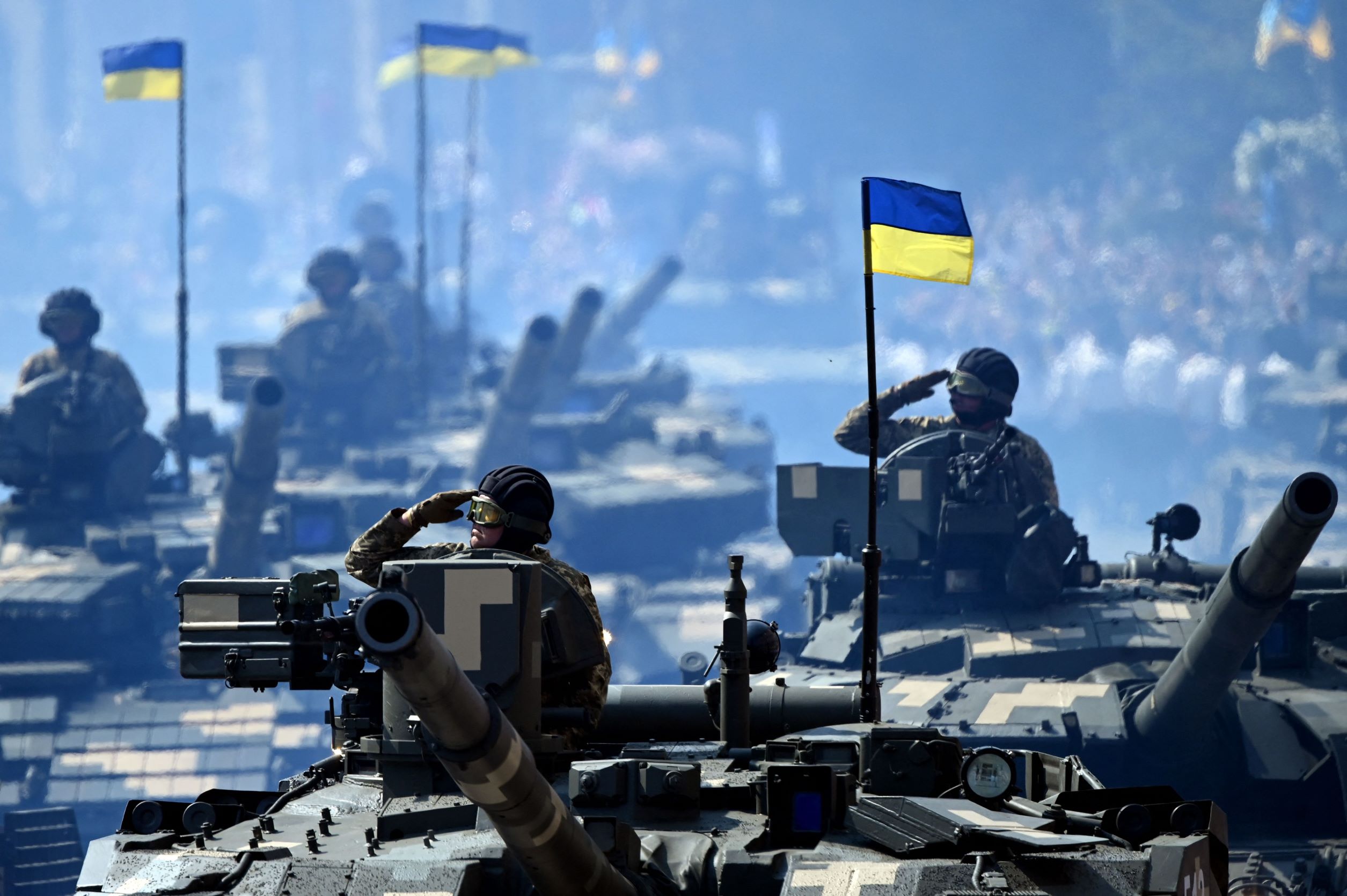
The Ukraine War is an ongoing armed conflict in the Russo-Ukrainian border that began in April 2014 between the Russian-backed pro-Russian separatists and the Ukrainian government. The conflict began when the Russian-backed rebels in the Crimea region of Ukraine declared their independence in March 2014, and subsequently initiated a massive military campaign through eastern Ukraine. The fighting has spread to other regions such as the Luhansk and Donetsk Oblasts, resulting in a heightened level of violence and multiple casualties. Wiki-Ukraine
The official government stance of Ukraine is that the conflict has its roots in Russia’s “aggression and continued violations of Ukrainian sovereignty,” while Moscow professes its non-involvement in the conflict. Since 2014, the war has claimed over 13,000 lives, displaced more than 1.4 million people, and destroyed cultural and economic infrastructure. Regardless of the official stance of the warring parties, the reality is that there are a number of historical and political factors that have contributed to the current state of affairs in Ukraine. In this article, we will explore some of the root causes of the Ukraine War, taking into account both internal and external factors.
Historical Factors
The conflict in Ukraine is deeply rooted in its history. As a result of its long shared and intertwined history with Russia, the two countries have long held different political orientations towards the West. Ukraine’s Soviet Union past has left a legacy of political, ethnic and religious divisions, as well as a reliance on Russian gas, commodities and investments. Furthermore, tensions between Ukraine and Russia intensified in the wake of the 2004 Orange Revolution, when a pro-Western government was formed. This further stoked the fire of Russian ambivalence towards Ukraine, who they viewed as a bridgehead for Western influence.
Ethnic Factors
The multi-ethnic composition of Ukraine’s population has been an important factor in the heated conflict. Russian-speakers constitute the largest ethnic group in Ukraine, with 24.4% of the population. The Russian language is widely spoken in Eastern and Southern Ukraine, and it is estimated that around half the population of urban centers in these regions consider Russian their mother tongue. This has caused tensions between ethnic Russians and Ukrainian speakers, with pro-Russian groups taking advantage of ethnic divisions, stoking the fire of grievances and seeking to create a dangerous narrative of “ethnic injustice”.
Political Factors
The conflict between Russia and Ukraine has been further compounded by their differing stance on foreign policy, as well as their divergent interpretations of the 1994 Budapest Memorandum, which established the basis for Russia’s potential participation in nuclear disarmament.
Russia has continually defied the terms of the agreement, launching a military campaign in Ukraine in the spring of 2014, under the pretext of responding to violence against ethnic Russians in Ukraine. The tense Russia-Ukraine relations were further exacerbated by the 2014 Ukrainian revolution and the subsequent Maidan protests. Since then, the two countries have been locked in an intense political confrontation due to political instability in Ukraine and a number of other regional factors.
Military Factors
The military intervention of Russia in Ukraine has been a major factor in the ongoing conflict. The Russian military has deployed forces within Ukrainian borders and provided arms and other military aid to the rebels, in violation of international law. Furthermore, Russian intelligence agencies have been involved in supplying the rebels with weapons and logistical support.
Financial Factors
Economic factors have been an important cause of the conflict in Ukraine, as the Russian economy has been severely weakened by Western sanctions. The Ukrainian hryvnia has suffered greatly due to the war, plunging to its lowest value against the US dollar in mid-February 2015. This has caused financial hardship for Ukrainians, many of whom now struggle to make ends meet owing to the devaluation of the hryvnia and hyperinflation that has followed.
Geographical Factors
Geographical factors are closely linked to the military and financial factors mentioned above. Ukraine is connected to the EU by the 2004 Baku-Tbilisi-Verden pipeline, and is in a strategic position due to its proximity to Russia. This has made Ukraine an increasingly attractive location for the EU, who has expanded its interest in the region. On the other hand, Russia has sought to retain its influence in the region, as well as blocking EU gas supplies moving into the region.
Current Situation
The conflict in Ukraine has caused a massive humanitarian crisis, with thousands killed and millions fleeing the country as refugees. In addition to the huge economic losses, both in terms of production and investments, the war has had devastating consequences for educational, cultural and scientific sectors.
The Ukraine War is a complex and multifaceted conflict with no clear solution in sight. We’ve only scratched the surface of the complex set of historical, ethnic, political, economic and military factors that have contributed to the current state of affairs. In order to achieve a lasting peace, both sides will have to make difficult concessions, and the international community will have to come together in order to broker a solution.