



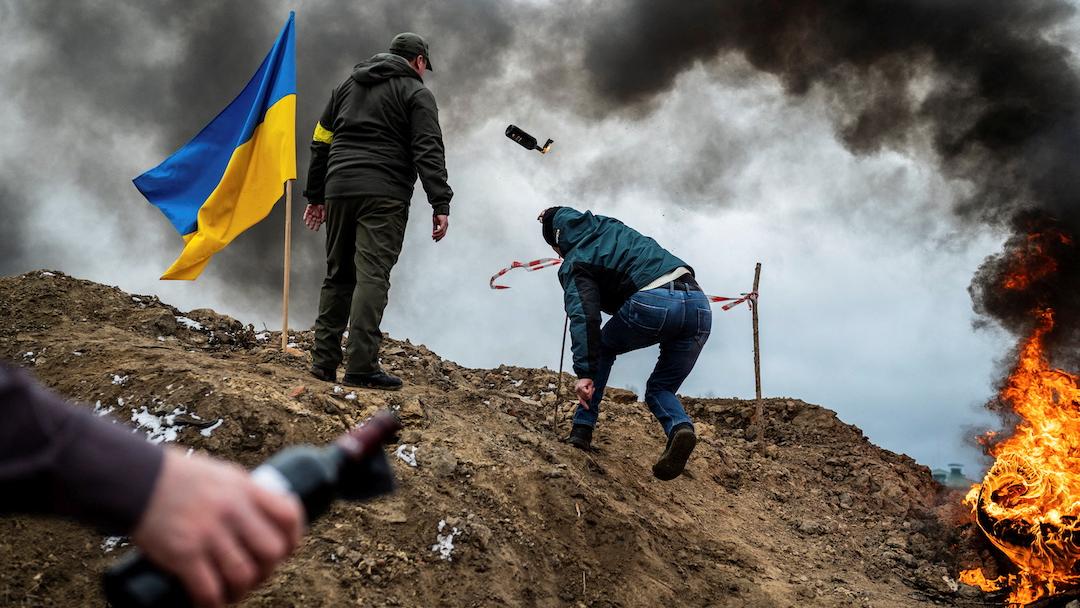
Rebuilding After Armed Conflict: The Economic Challenges Armed conflicts can have devastating economic consequences, especially for those in the countries directly affected. From infrastructure, businesses and natural resources, to communities, systems and generations of people, these conflicts can tear apart the very fabric of a nation.
In the aftermath, rebuilding these broken systems and structures can be complex, difficult and costly, demanding an enormous amount of investment both financially and politically. In this article, we will assess the economic challenges of rebuilding after armed conflict, exploring the different types of reconstruction available and examine their potential successes, failures and effects on communities.
Economic Impact of Armed Conflict
The economic cost of war is wide-reaching and immense. It affects both direct and indirect costs, ranging from loss of human life, devastation to natural and built infrastructures, loss of investment and disruption to supply chains.
Direct Economic Costs
Some of the direct economic costs of armed conflicts include:
• Loss and destruction of housing and other assets owned by individuals and businesses
• Reduction in production and output as businesses and services close
• Decline and disruption in credit and financial markets
• Loss of goods in circulation due to looting and destruction
• Physical infrastructure damage, including homes, offices and roads
• Loss of public services such as health and education
• Loss of public and private investments
Indirect Economic Costs
The economic costs of war will also impact future economic activity as investment and trade dry up, migration rises, and there are long-term disruptions to the labour supply, productivity and growth.
Other indirect economic costs resulting from armed conflicts include:
• Food shortages and long-term nutrition problems
• Reduction in foreign investment and aid
• Widening inequality due to weak or absent government services
• Insecurity leading to the displacement of families, businesses, and communities
• An inability to sustain health care due to disruption of services and organizations
• Impact to the environment
• Loss of operating capital
• Rampant inflation, as currency devalues
• Creation of parallel markets and lack of access to formal markets
• Illicit drug trade and trafficking in conflict regions
• Loss of cultural heritage and local knowledge
Types of Post-Conflict Reconstruction
In order for countries to rebuild after armed conflict, there are a number of post-conflict reconstruction models available, with varying degrees of success. Below we will explore each model and its advantages and disadvantages.
Immediate Reconstruction
Immediate reconstruction focuses on restoring basic services and infrastructure, while also helping to recreate a stable environment. The idea behind this model is that if the local population feels secure, supporting the economy and development becomes much easier.
Advantages
• Quickly provides essential services to those in need
• Helps to reestablish an environment of stability
• Creates jobs for returning refugees
• Can improve public infrastructure and services
• Paves the way for long-term reconstruction
Disadvantages
• A lack of focus on economic reconstruction
• Results in an unsustainable level of debt
• May create large public expenditure levels
• Does not necessarily promote economic growth
Rehabilitation
The rehabilitation model focuses on creating economic activity in the short run in order to help those affected by conflict. It sees conflict reconstruction as the cultivating of human, social and capital resources.
Advantages
• Can create jobs and poverty alleviation programs
• Helps local populations to become self-reliant
• Can assist in protecting cultural heritage
• Empowers vulnerable groups
• Focuses on independent economic growth
Disadvantages
• Results in high levels of government debt
• Short term aid without long-term solutions
• Can create an opiate of the masses
• Can cause aid to be abused and corruption to increase
Sustainability Model
The sustainability model focuses on long-term economic growth by creating conditions and resources for economic development. It sees conflict reconstruction as an opportunity to create better economic and political structures.
Advantages
• Improves economic transparency
• Promotes democratic participation in decision-making
• Enhances access to social services, such as education and healthcare
• Reduces economic inequality, especially for women
• Empowers local populations
Disadvantages
• Can take a long time to implement
• Costly and requires a high level of government financing
• Higher level of commitment needed
• More difficult to measure success
Social Investment Model
The social investment model focuses on creating the capacity to invest in people and the community, helping them build stability and develop their capacity.
Advantages
• A long-term investment in people and communities
• Focuses on creating a strong foundation for conflict resolution
• Can result in improvements to infrastructure and services
• Improves access to employment opportunities
• Reduces inequality
Disadvantages
• Requires a commitment from the population to understand and cooperate with the policy
• Long-term investment and difficult to measure short-term gains
• Requires large sums of money for implementation
• Can be subject to corruption
Rebuilding after armed conflict is no easy task and can have a devastating impact on an economy. The economic challenges stemming from war can be immense and wide-reaching and can take a long time to heal. However, there are a number of post-conflict reconstruction models available that can help countries create economic stability and growth in the long-term. These models can provide a way to rebuild both the physical and social infrastructure that has been disrupted by conflict.
The lasting economic impact of armed conflict will vary depending on the country, but understanding the challenges that must be faced to reconstruct a nation is the first step to creating a lasting peace. With this knowledge, countries can create effective strategies that balance the need for both immediate relief and long-term development, ensuring the safe and sustainable rebuilding of their economies.