




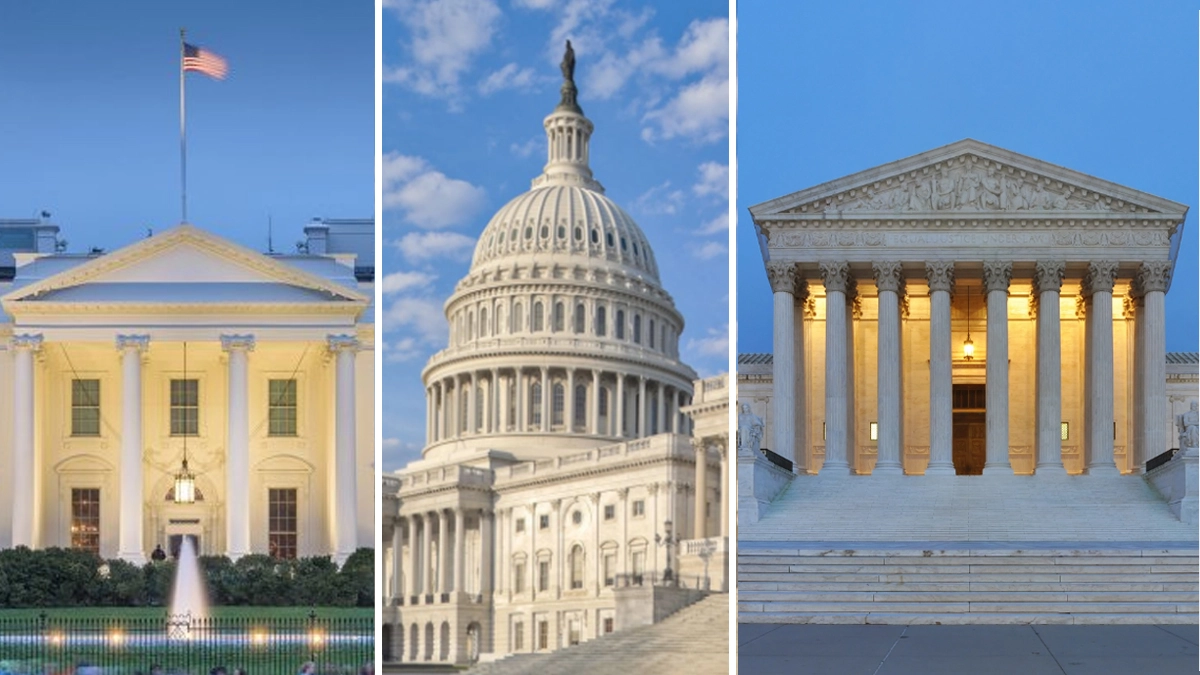
The United States is one of the first countries to effectively institute the presidential form of government, which it established in 1789. The Constitution of the United States dictates how government power is to be distributed within the structure of the US Federal Government. As part of this system, the President is responsible for leading the country and has several powers, both inherent and delegated. However, there are certain limitations to these powers as well. Understanding the powers and limitations of the US Presidential System is critical to the maintenance of a balanced National Government.
The Powers of the President
The powers of the President are divided into two categories: inherent and delegated.
Inherent Powers
Inherent powers are those that are granted to the President by virtue of the executive office. These include:
• Commander in Chief of Armed Forces: The President of the United States is commander in chief of all the Armed Forces of the United States, and can order their deployment anywhere in the world.
• Authority to decide whether to sign or veto a bill that has been passed by Congress: The President can sign into law any bill that has been passed by Congress, or veto it if he or she feels it does not serve the best interests of the country or its constituents.
• Sign Executive Orders: The President can issue executive orders, which are commands to the Federal Government that have the same effect as a law.
• Conduct Foreign Relations: The President can negotiate treaties with foreign countries, appoint ambassadors and handle any international disputes the country may have.
Delegated Powers
Delegated powers are those that are granted to the President from the Constitution, such as the power to:
• Appoint Judges: The President can appoint justices to the Supreme Court as well as judges to the federal bench.
• Grant pardons: The President can grant pardons to those found guilty of a crime, who have fully served their sentence.
• Make Recommendations to Congress: The President can make recommendations to Congress on how to proceed with policies or legislation.
• Approve or Disapprove Regulations: The President can approve or disapprove regulations proposed by executive agencies.
Limitations on the Powers of the President
The US Presidential Powers have certain limitations in order to maintain the balance of power and to prevent the abuse of power by any one branch of the government. The limitations on these powers include:
• The President must obey laws passed by Congress.
• The President cannot declare war without the approval of Congress.
• The President cannot amend the Constitution without the approval of two-thirds of both the House and Senate.
• The President cannot veto a bill passed by Congress if it is supported by two-thirds of the House and Senate.
• The President must obtain the advice and consent of the Senate for appointments of high-ranking officials, as well as for legislation that requires Senate approval.
• The President has limited powers to restrict immigration and can only exercise such powers in accordance with existing statutes.
The US constitution has long been a model of government with a carefully balanced separation of powers. The President’s powers are designed to ensure that the US Executive Branch is able to effectively lead the nation and make decisions on important matters; however, there are limitations to these powers to help protect the checks and balances of the US government. It is important to understand the powers and limitations of the US Presidential System in order to maintain a National Government in which powers are properly distributed among the branches.