



Blitzkrieg, also known as lightning war, was a tactic used predominantly during the early stages of World War II by the Germany army to achieve quick battles with devastating success. The German word for blitzkrieg translates literally to “lightning war,” however, blitzkrieg actually encompasses multiple tactics such as concentrated and flexible deployments of tanks and mobile infantry, combined-arms teams, and tactics that heavily involved airpower.
History and Origin of Blitzkrieg
Blitzkrieg gained attention during World War II, however, its roots can be traced all the way back to the 19th century when Prussian General and Military Historian Carl von Clausewitz wrote in his famous book, On War, that ‘One should count on it that the next war will resemble a hurricane more than a boxing match’ – a lightning war. Blitzkrieg was actually a combination of theories and techniques that made its debut on the European continent during the Nazi period.
Advantages of Blitzkrieg
The lightning war strategy had multiple advantages. The most distinguishable benefits of the blitzkrieg were its mobility, surprise, and superior firepower. Through powerful mechanized force, the German army could often overwhelm the enemy quickly, making them unable to fight back effectively.
Here are the main advantages of Blitzkrieg:
• Superior Firepower: Blitzkrieg relied heavily on firepower and the integration of combined-arms forces. Concentrating all available firepower on the enemy could cause heavy casualties and make it difficult for them to mount an effective counterattack.
• Mobility: Blitzkrieg’s use of mechanized forces made them highly mobile which was advantageous in the battle field. The German military was able to quickly and effectively move their forces around the battle field to outmaneuver the enemy.
• Surprise: Blitzkrieg often relied on surprise tactics to take the enemy by surprise. Such surprise tactics allowed the Germans to gain the initiative in the early stages of the war and maintain their advantage during the whole war.
• Psychological Impact: Using fast and powerful tactics often caused a psychological impact on the enemy, breaking their confidence, and giving the German forces the upper hand.
Common Tactics Used in Blitzkrieg
The Blitzkrieg strategy relied heavily on tanks and mobile infantry, combined-arms teams, and tactics involving airpower. The strategies used were focused on quick strikes, surprise tactics, and the idea that the primary goal of the tactic was to demoralize, divide, and disrupt the enemy’s forces so that they could not mount a cohesive defense.
Here are some of the tactics used in the Blitzkrieg strategy:
• Encirclement: Also known as ‘double envelopment’, encirclement was the most commonly used technique in Blitzkrieg warfare. This tactic focused on encircling the enemy with fast-moving mechanized forces before the enemy had a chance to respond.
• Panzerschreck: This tactic was used to break through enemy lines by using fast-moving tanks charging through them.
• “Flying Wedge”: This tactic focused on using infantry to establish a wedge formation in order to break through the enemy lines.
• Terror Tactics: This tactic focused on using terror against enemy forces to break through their defense.
• Air Superiority: This tactic involved using airpower to gain control over the battlefield. This allowed the Germans to gain dominance over enemy forces.
• Coordination: The Germans used coordination between tanks and infantry to use their combined firepower for quick and effective strikes. This tactic used the full potential of the blitzkrieg strategy by combining all of its elements.
Examples of Blitzkrieg in Action
Blitzkrieg was used extensively during the early stages of World War II and proved to be an effective strategy against most opponents. Here are some of the most famous examples of blitzkrieg in action during World War II:
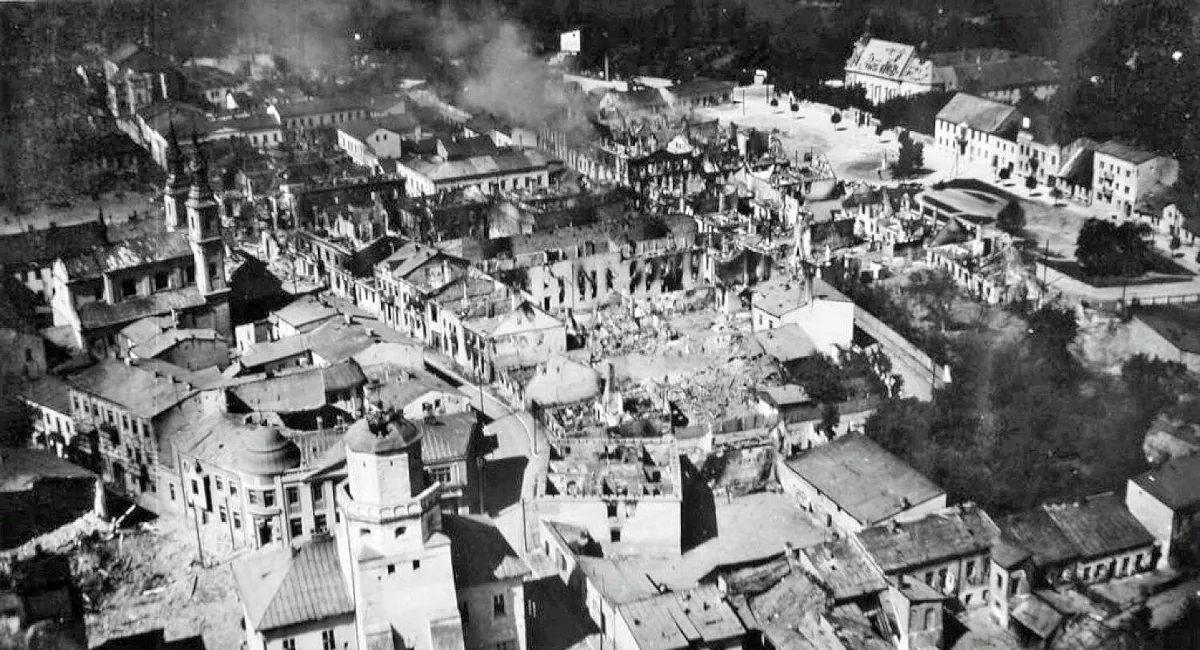
• The Battle of Poland: During the invasion of Poland in 1939, the German forces used blitzkrieg to overrun the Polish forces. The blitzkrieg tactics utilized during the battle proved effective and the forces of the Third Reich were able to quickly overwhelm the enemy.
• The Battle of France: During the invasion of France in 1940, the Nazi forces again used blitzkrieg to quickly overpower the enemy forces. The overwhelming force of the blitzkrieg proved effective and the Third Reich were able to gain control over the whole of France in less than a month.
• The Invasion of the Soviet Union: In 1941, the German forces invaded the Soviet Union and again used the blitzkrieg strategy. This time, however, Hitler’s forces were not able to gain the same resounding victory and after four years of fighting, the Germans had to retreat, defeated.
The Impacts of Blitzkrieg
The Blitzkrieg strategy had a significant impact on World War II and the military tactics used around the world. Here are some of the main impacts of these tactics:
• Development of Tanks: Blitzkrieg relied heavily on tanks and mechanized forces, which caused the development of tanks all over the world. The success of blitzkrieg caused other military forces to invest heavily in tanks and other forms of mechanized forces.
• Innovation and Adaptation: As the war continued, other militaries adapted their tactics to counter the blitzkrieg strategy. This led to the development and innovation of multiple tactics to combat the blitzkrieg.
• Psychological Impact: The lightning war strategy had a psychological impact on enemy forces. The Blitzkrieg caused shock, surprise, and often caused an enemy to lose their morale. This was a big advantage for the Nazis during the war.
Blitzkrieg was a lightning war strategy used by the German army during the early stages of World War II with devastating success. The blitzkrieg gained immense popularity due to its mobility, surprise, and superior firepower. It was effective in gaining advantage over the enemy forces, however, as the war went on and enemies adapted to it, it became less effective. Still, the impacts of the blitzkrieg strategy are still visible today, and it is considered one of the most influential military strategies used during the second World War.