





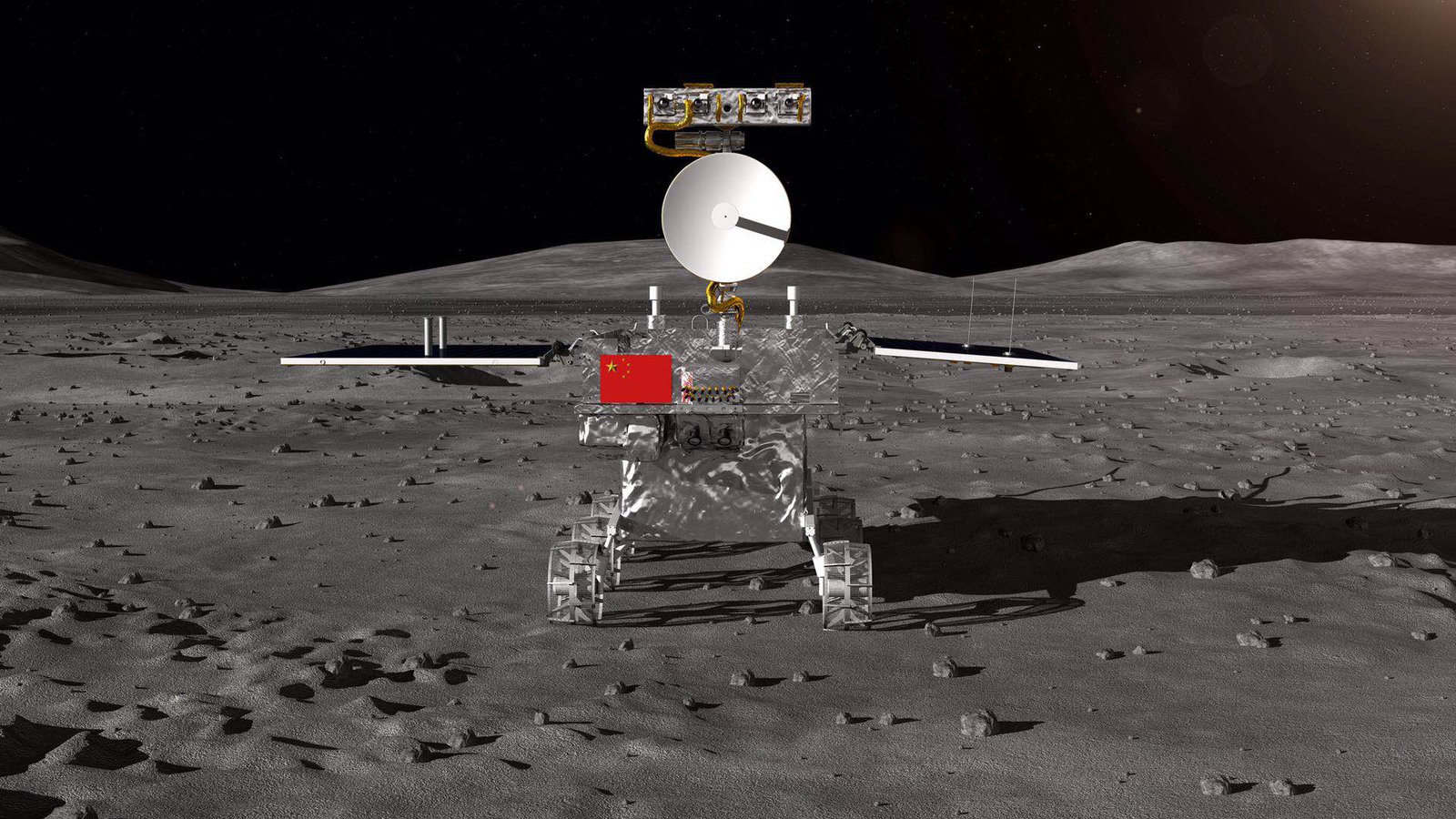
In January 2019, China achieved something that no other country had before – landing a rover on the far side of the moon. This incredible feat was made possible through the Chang’e 4 mission, and it has marked a huge advancement for China’s space exploration. This mission has, and will continue to have, far-reaching implications, both for China and the entire world. In this article, we will explore the details of the mission, its historical significance, and the implications it may have for future space exploration.
Background of the Mission
To better understand the significance of the mission, it is first important to have a basic understanding of the mission itself. In 2013, China launched its Chang’e 3 mission to land a spacecraft on the moon. The mission was successful, and the country followed up with the launch of the Chang’e 4 mission in December 2018. This mission was unique in its design, aiming to make use of the back side of the moon instead of the traditional more accessible front side.
What Made the Mission Different
The Chang’e 4 mission was different to previous lunar missions because of the many challenges that had to be solved in order to make it a reality. One of these challenges was communication. Because of the far side of the moon’s unique positioning, radio signals could not make it back to Earth. To address this challenge, China used a satellite that orbits the moon to receive signal from the spacecraft, and then forward the signal to Earth to be received and processed.
Another challenge that was faced with the mission was the unusual terrain of the far side of the moon. The moon’s far side is covered in much deeper craters than the front, making it much more difficult for the spacecraft to land safely. To work around this, the spacecraft first explored the landing site from a distance before paying its hovering module towards the ground to implement its soft landing system.
Significance of China’s Accomplishment
China’s success in safely landing a spacecraft on the far side of the moon is more than just a technical feat. The mission has once again displayed the country’s ambition when it comes to space exploration, particularly when it comes to ambitious lunar and planetary missions. This feat demonstrates the country’s impressive capabilities in aerospace science, which is the cornerstone of many developments today, including communication, remote sensing, environmental protection, and global security.
In addition to technological advances, the success of the Chang’e 4 mission has demonstrated that China is now on the same footing as the other major players in space exploration. After over 50 years of U.S. and Russian space exploration, China has stepped alongside as the third major power in space exploration.
Implications for Future Space Exploration
In addition to the immediacy of technological advances and a shift in the space exploration hierarchy, the Chang’e 4 mission also has implications for future space exploration. In particular, future space exploration is likely to be much more collaborative between all three major powers. With the success of the mission, China is now able to take on a leadership role in interplanetary exploration, something that was almost inconceivable before. With more countries working together on ambitious missions, there is tight potential for discovery and progressing our understanding of the universe around us.
Benefits for Developing Countries
The success of the mission is also a great example of how success in space exploration can be used to benefit developing countries. Already, the mission has provided valuable data that can be applied to developing areas, such as an increased understanding of lunar material and its potential uses in engineering and agriculture, as well as medical research.
Furthermore, the success of the mission serves as a source of powerful inspiration for the youth of developing countries. Having already seen great success, both technically and in terms of international recognition, Chinese youth and others will be empowered to reach for further achievements in the future.
In January 2019, China achieved something that no other country had before – landing a rover on the far side of the moon. This incredible feat was made possible through the Chang’e 4 mission and has marked impressive new advancements in China’s space exploration. On a more global level, the mission has far-reaching implications, both in terms of technological and international collaboration. Going forward, collaborations between the major powers in space exploration are likely to increase, leading to further advancements in our understanding of the universe. The success of the mission has also proved to be an inspiration for developing countries, which can now leverage the mission’s successes to benefit from further advances in science, engineering, and agriculture.


