





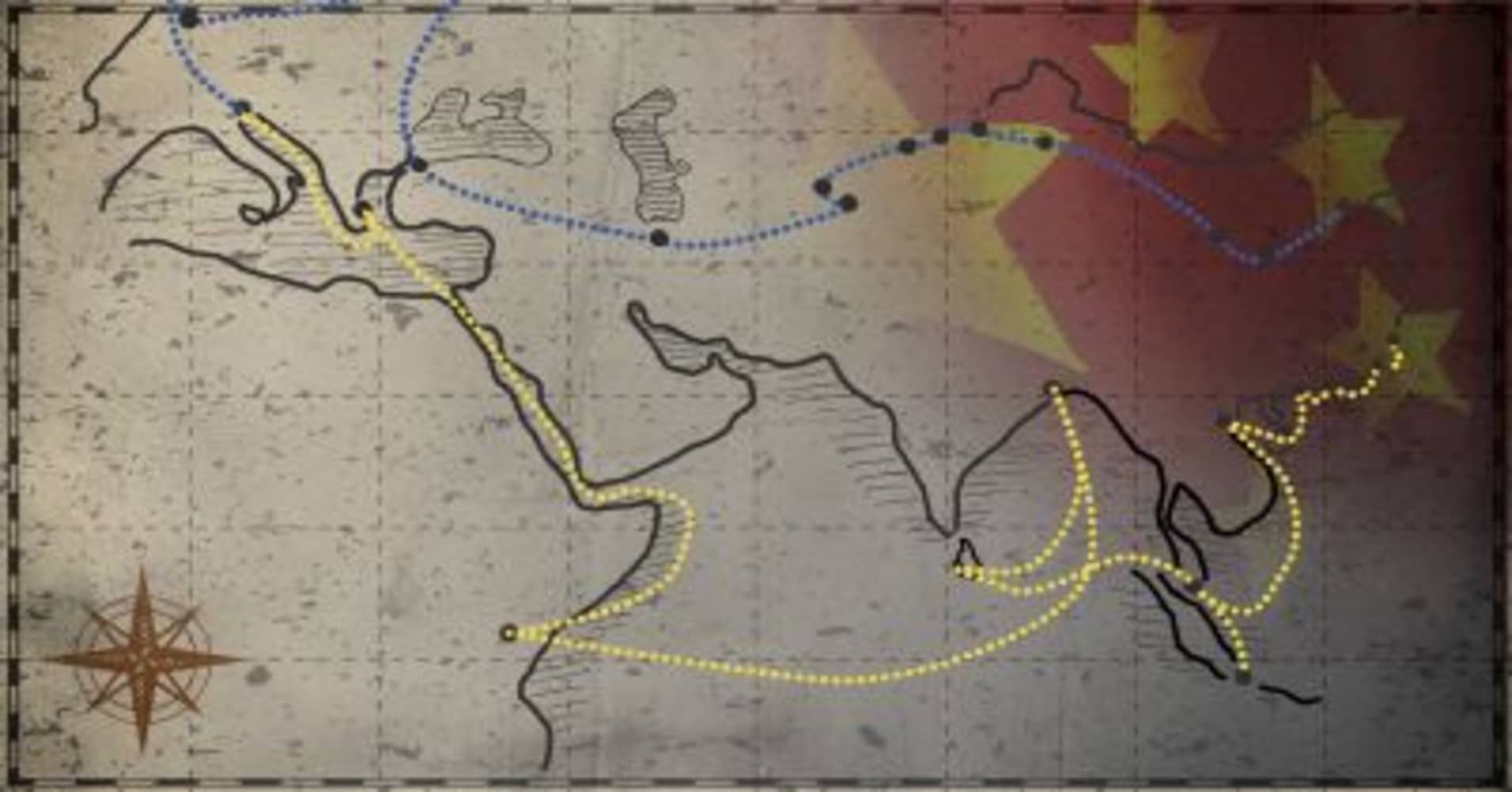
The Belt and Road Initiative (BRI) was proposed by China in 2013, as a way of fostering economic cooperation and integrating economies of Eurasia and Africa. It is an extensive infrastructure and trade project that strives to link Asia, Europe, Africa, and beyond by reviving the ancient Silk Road routes of the Tang dynasty and linking East Asia with Central Asia and the Middle East. This historic project of trade and connectivity is said to be one of the largest infrastructure initiatives in human history.
What are the Benefits of the BRI for China?
The BRI offers many benefits for China. The initiative is a grand effort to strengthen its economic and geopolitical ties with an increasing number of neighboring countries, and to make them part of China’s global network for trading across Eurasia and Africa. Through this, China becomes more interconnected with the rest of the world, increasing the potential of international cooperation, trade, and the exchange of goods and ideas.
As a result of China’s global ambitions, the Belt and Road Initiative grants Chinese institutions the opportunity to access and invest in new markets, whilst breaking down trade barriers amongst participating countries. The aim is to build or rebuild infrastructure, trade hubs, and energy pipelines; this helps China to establish itself as a global superpower and to expand its international presence and influence.
What Are the Challenges Facing BRI Countries?
Many countries along the BRI routes are now struggling to manage their debts, due to taking out large loans from China to develop their countries. Although the BRI has been praised for the economic opportunities it provides, it has also been criticized by some countries, such as Malaysia and the Maldives, for its unsustainable debt-trap diplomacy.
The Overseas Development Institute (ODI) released a report which highlighted the difficulties emerging economies face when taking out loans for BRI projects such as high-interest rates and hefty fees. The result of this is a heavy burden on emerging economies, which can prove detrimental to their own economic prosperity in the long run.
How Does China Enhance Financing Support to Belt and Road Countries?
In an attempt to address these issues, China has recently announced a significant increase in loan support to help Belt and Road countries overcome debt difficulties. This increase of aid comes as a result of the worsening economic situation in many of the BRI countries, which has been partly caused by the Covid-19 pandemic.
China will now provide additional financial resources to the BRI countries by properly managing existing debts and giving more attention to the debt relief processes of the emerging economies. It plans to do this by offering flexible debt repayments that include restructuring, intergovernmental swaps, and debt relief.
China will also set up financial venues and knowledge platforms to further help emerging economies manage their debt problems. This includes engaging in more cooperative government practices and entertaining relevant requests from the BRI countries and other countries in developing economies.
China also hopes to widen financing channels and give preferential policies to Belt and Road countries in terms of refinancing the existing loans, in order to alleviate the financial distress of these countries.
Benefits of China Enhancing Financing Support
Increased Loan Funds
By providing increased aid, China is aiming to strengthen the support system and expand the financial resources of Belt and Road countries. This will help to ensure that the already-allotted loan funds are properly utilized, and will make sure that debt repayments are more realistic and feasible.
Debt Management Platforms
By setting up financial and knowledge platforms, China will increase its ability to support the emerging economies by giving their governments more control over their debt management processes. This will help the countries in determining repayment schedules and work out more suitable debt solutions.
More Accessible Financing Channels
By widening the financing channels and offering preferential policies to Belt and Road countries, China is pushing for more private resources to flow into the emerging economies. This will make loan funds easier to access and will ensure that developing countries are closer to achieving their economic goals.
The Belt and Road Initiative (BRI) is an ambitious project from China, with the aim of strengthening its economic ties with nearby countries and advancing its expertise in international trade. Whilst there is no denying that many BRI countries are facing difficulty with their debt repayments, China’s efforts to increase its loan support has been welcomed. With the additional resources, China hopes to manage existing debts and widen financing channels to help emerging economies in the long run. Ultimately, China wants to use the BRI to boost international economic growth, powered by a strong trading network of connected nations.


