




The Chinese Folk Religion is an ancient yet vibrant spiritual and religious expression of belief systems found in China. It is one of the oldest religions, predating the advent of Confucianism, Taoism, and Buddhism which originated in China. This religion is largely about the belief in and worship of the forces of nature and ancestor spirits. Chinese Folk Religion also embraces the idea of various immortals and gods, believing in the fundamental concept of harmony and balance between humanity, nature, and the divine.
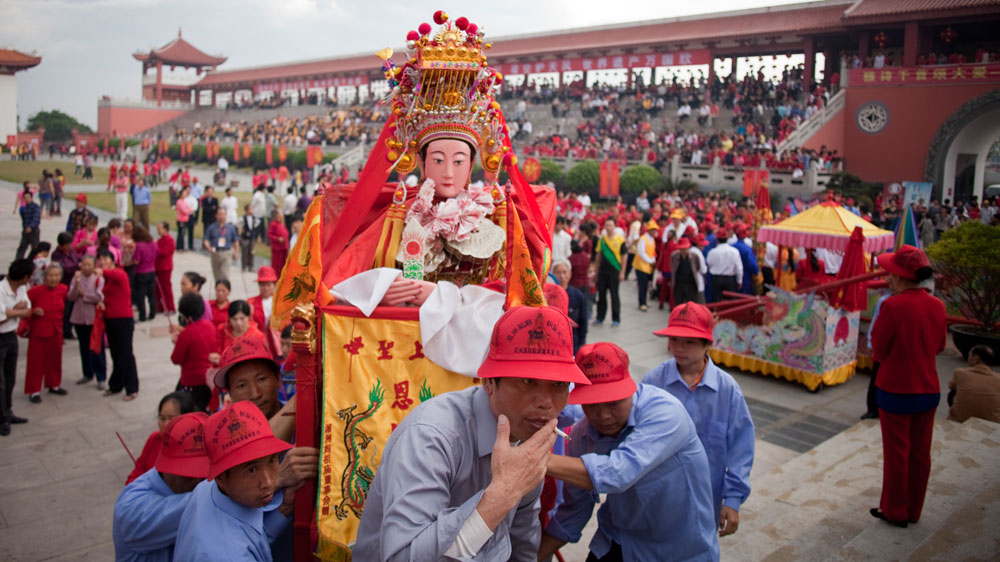
Traditional Chinese folk religion emphasizes ancestor worship and veneration of the gods and goddesses of heaven, earth and nature. Worship of ancestors and gods is practiced in family homes, neighborhood temples, and ancestral shrines. A series of ritual practices and sacred festivals, like the Dragon Boat Festival and Mid-Autumn Festival, form an integral part of Chinese culture. Here, we’ll delve into the Chinese Folk Religion, looking at its beliefs and practices.
Beliefs of Chinese Folk Religion
The Chinese Folk Religion is based on the concept of ‘Yin-Yang’, which refers to the balance between the opposing forces of nature and the universe. Yin is the passive, female force while Yang is the active, male force. Taoism, a philosophical religion based on the ‘Tao’ (‘way’ or ‘path’) is closely related to Chinese folk religion and their beliefs are intertwined.
In Chinese folk religion, gods and goddesses from different realms, from the underworld to the heavens, are venerated and worshipped. They are believed to influence everyday life and people’s fortunes and destiny. These gods and goddesses appear in various forms: as animals, trees, humans or as abstract concepts or symbols. The belief in religious divinities exists in harmony with Confucianism, Buddhism and Taoism and many people pay tribute to several different gods.
Animism is another cornerstone belief in Chinese Folk Religion. This refers to the belief that everything in nature has a spirit, including plants, animals and rocks. Following this belief, the spirits of ancestors are also venerated, which is the main basis of ancestor worship. Ancestors are seen as a link between the dead, the living and the divine.
Practices of Chinese Folk Religion
One of the most important practices in Chinese Folk Religion is ancestor worship. This reverence of ancestors is so important that there is a Chinese saying ‘Without ancestors, there is no one to revere’. Ancestor worship involves worshipping the spirits of the dead during festivals, offering prayers and gifts at ancestral shrines, and consulting a medium during important rituals.
Prayers are also a key element of Chinese Folk Religion. People pray to the gods, usually to seek help or guidance. Prayers can also be offered during rituals, festivals, or to commemorate special occasions.
Sacred festivals are also an important part of Chinese culture, as well as Chinese Folk Religion. Mid-Autumn Festival, Spring Festival (Chinese New Year) and Dragon Boat Festival are some of the most popular festivals celebrated. During these festivals, people gather to provide food and offerings to gods and goddesses. Fireworks, dragon and lion dances are essential components of the celebrations.
One of the most intriguing components of Chinese Folk Religion is the practice of Feng Shui, the ancient art of harmonizing human settlements with their environment. This philosophy is to be found in every aspect of life in Chinese culture including the Chinese language.
Chinese folk religion has been a major part of Chinese culture and history for thousands of years. Believing in a harmony between humanity, nature, and the divine, Chinese folk religion revolves around the veneration of gods, goddesses and the spirit of ancestors. Practices like ancestor worship, prayers, and sacred festivals form an integral part of this religion and create a vibrant spiritual and religious experience that is passed down from generation to generation.
Originating from China, Chinese Folk Religion has since spread to many countries in the world, with followers in places as far as the United States, Singapore and beyond. Chinese culture and the Chinese Folk Religion remains an influential force in the areas of philosophy, the arts, and religion.


