





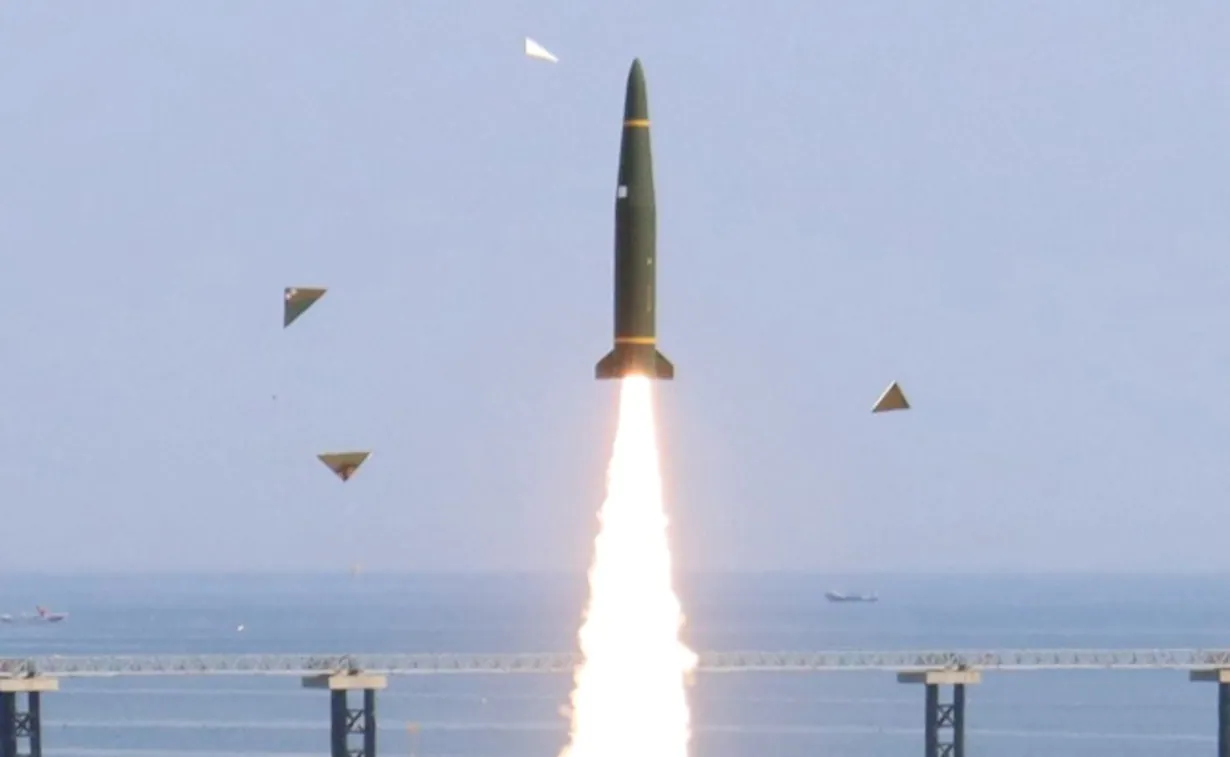
On May 9 2019, North Korea fired two short-range ballistic missiles into the Sea of Japan, prompting international concern over the country’s renewed desire to increase its nuclear capabilities. The missiles came in the midst of stalled talks between North Korea and the United States over denuclearization, leading many analysts to believe that the launch was Pyongyang’s attempt to further its own agenda. This article will explore North Korea’s motivation for firing two short-range ballistic missiles, the response from international leaders, and the potential impact of the missiles being launched.
Background on North Korea’s Missile Program
North Korea has a long and complicated history regarding its development of ballistic missile technology. The country first began producing ballistic missiles in the late-1970s and has since tested multiple missile types, ranging from short-range to intercontinental. Its aim is to build a nuclear weapons capability, one that would give it the ability to launch a nuclear strike against rival countries.
However, since 2006, North Korea has been under economic sanctions imposed by the United Nations in an attempt to deter its continued development of ballistic missiles. These sanctions have crippled North Korea’s economy, and while they have had some success in slowing down the country’s nuclear capabilities, they have also left many North Koreans living in extreme poverty.
Why North Korea Launched Two Short-Range Ballistic Missiles
Though it is difficult to pinpoint North Korea’s motivations for firing two short-range ballistic missiles, there are several theories suggesting the country’s intent. Some analysts believe North Korea was responding to military exercises being conducted between the U.S. and South Korea. Others suggest the launch was an attempt to gain leverage in its ongoing negotiations with the United States over denuclearization.
Additionally, there are some analysts who believe that North Korea was attempting to make a statement about its unwillingness to compromise with the United States. The missiles may be a sign that Pyongyang is feeling frustrated with the lack of progress in talks, and that they are ready to take further action if their demands are not met.
The International Response to the Missile Launch
The launch of two short-range ballistic missiles by North Korea has prompted a response from the international community. The United States, South Korea, and Japan have all condemned the launch as a violation of U.N. sanctions and a threat to regional stability.
The Security Council is expected to hold an emergency session soon where it will discuss the launch and the potential consequences of further violations by North Korea. The United States and its allies have also called on North Korea to exercise restraint and return to the negotiating table.
Potential Impact of the Ballistic Missile Launch
The launch of two ballistic missiles by North Korea could have wide-ranging consequences, both globally and in the Korean peninsula. It could potentially reignite tensions between the U.S., South Korea, and North Korea which had been de-escalating in recent months due to talks.
The launch could also lead to further economic sanctions being imposed on North Korea, which could exacerbate the country’s already crippling economic problems. Furthermore, if the missiles had a nuclear payload, it could threaten the stability of the entire region.
North Korea’s firing of two short-range ballistic missiles has prompted an international response from the United States and its allies. The launch could be an attempt by North Korea to gain leverage in negotiations over denuclearization or a sign of frustration with a lack of progress in talks.
The missile launch could have serious consequences, including a potential threat to regional stability if the missiles had nuclear payloads. It could also lead to the imposition of further economic sanctions which would further weaken North Korea’s already crumbling economy. In the end, only time will tell if the launch has achieved Pyongyang’s objectives.


