



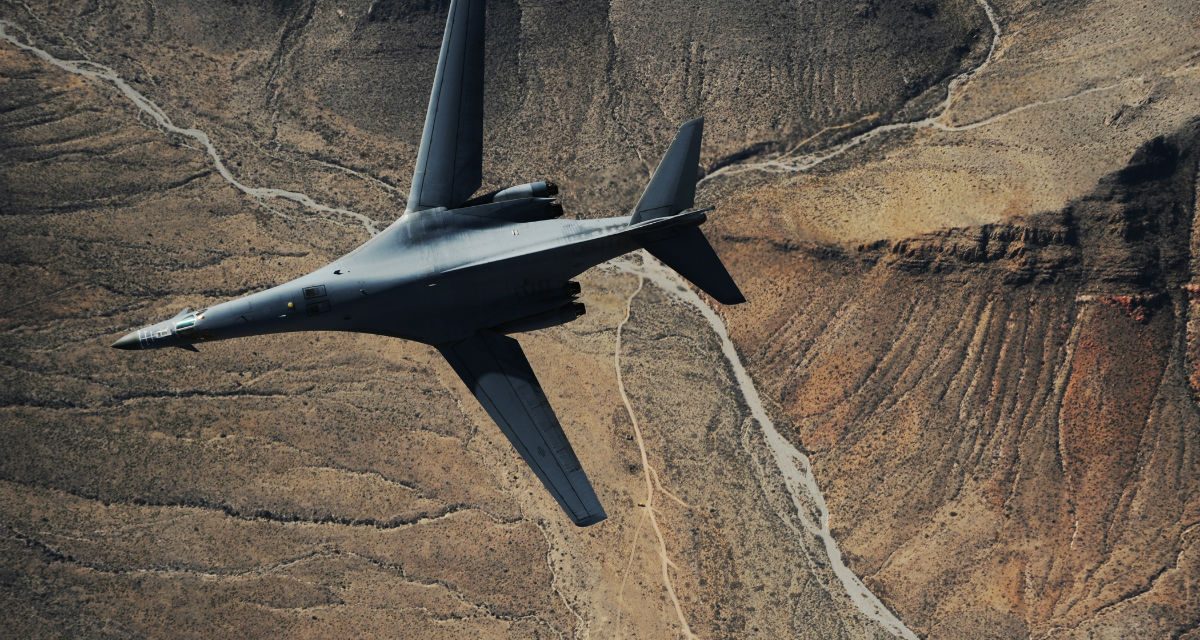
Air Power has been an important presence in warfare since the dawn of aviation at the beginning of the 20th century. From its use in World War I for scouting, observation and fighting to modern-day strategic bombing campaigns aimed at an enemy’s infrastructure, Air Power has evolved as a vital component of many a nation’s military arsenal. This article looks at the role of aviation in modern warfare and strategic bombing, from the Iberian Peninsula Campaign of the 1930s to the US-led bombardment of Iraq in 1991.
History of Air Power
The earliest documented military use of aircraft was during the Italo-Turkish War of 1911-12 when the Italian Army used a fleet of aircraft for reconnaissance, bombing and artillery spotting. Other early examples of aircraft in warfare include the Zeppelin-L.59 bomber in use by the Imperial German Army during World War I and the Caproni Ca.20 biplane bomber by Great Britain’s Royal Flying Corps in 1918. It wasn’t until World War II though that large scale aerial bombardment campaigns became commonplace.
The Iberian Peninsula Campaign
The Iberian Peninsula Campaign was a two-year air offensive conducted by the Axis powers from 1937 to 1939 against the populace and infrastructure of the Spanish Civil War. The German Luftwaffe and their Italian counterparts conducted sustained strategic bombing operations against the cities and populations of Spain with the express intention of weakening the enemy and preventing any successful resistance. The Iberian Peninsula Campaign marked a significant change in the way wars would be fought in the years to come, with air power being used as a form of terror bombing and diplomatic leverage to achieve the desired result.
The Vietnam War
The Vietnam War saw the US forces deploy air power in an attempt to gain a tactical advantage. US forces targeted North Vietnam’s infrastructure and military targets with a combination of napalm, chemical weapons and high altitude bombing raids. The US forces also used their air superiority to gain intelligence on their enemy’s movements, capabilities, and locations in order to send troops to the correct areas and penetrate deeper into enemy territory. By the end of the war, the US had flown over three million combat sorties and dropped over six million tons of bombs.
The Gulf War
In 1991, the US-led coalition forces conducted a major strategic bombing campaign against Iraq in the lead up to, and during the Gulf War. This military and diplomatic campaign involved a large-scale aerial bombardment of Iraqi targets and was intended to degrade Iraq’s ability to wage war and weaken its resolve to resist Western pressure. The campaign was successful in freeing Kuwait from Iraqi occupation and signalled a shift in military strategy to rely heavily on air power to achieve diplomatic and military goals.
Effects of Air Power
The effects of air power on modern warfare can be both positive and negative, depending on the situation and the objectives of the campaign. Air power gives governments the ability to project their influence and power far beyond their own borders and create a unified front of nations to enforce their objectives. On the other hand, air power can also be used to cause destruction and destruction, as shown in the strategic bombing campaigns of the 20th century.
The ethical and moral implications of air power should not be ignored and it’s important to consider the effects on civilian populations and infrastructure when conducting air campaigns. The introduction of precision-guided munitions has however allowed for more surgical strikes and the ability to minimise civilian casualties and disruption.
Advantages and Disadvantages of Air Power
Advantages
• Fast and flexible – Air power has the advantage of being fast and flexible thanks to its ability to move quickly and deploy forces quickly. This can be used to quickly reposition troops and gain strategic advantages over an enemy.
• Escalation – Air power is also suitable for escalation, as it can be used to increase the pressure on an enemy without having to commit ground troops and risk a more costly ground war.
• Range of combat options – Air power also offers a wide range of combat options, from intelligence gathering and reconnaissance to high-precision surgical strikes.
• Cost effectiveness – Air power is much more cost effective than other forms of warfare and can be used to cost-effectively support ground troops and target an enemy’s infrastructure at much less risk and expense.
• Strategic targeting – Air power also allows for strategic targeting of an enemy’s assets, infrastructure and forces in order to obtained desired diplomatic and political objectives.
Disadvantages
• Collateral damage – The most significant disadvantage of air power is the potential for collateral damage to civilians and non-military targets, particularly when conducting surgical or precision strikes.
• Lack of precision – Air power can often lack the degree of precision required in order to target enemy forces and objects accurately.
• Difficult to sustain – Air power is difficult to sustain in the long term and can be costly to maintain a large fleet of aircraft.
• Vulnerability – The reliance on aircraft makes air power vulnerable to enemy countermeasures, such as surface to air missiles (SAMs), anti-aircraft artillery (AAA), and fighter aircraft.
Air power has been an important part of warfare since the dawn of aviation and has evolved significantly since its use during World War I. From the Iberian Peninsula Campaign to the strategic bombing campaigns of World War II and the Gulf War, Air Power has been used to great effect as a way of achieving political and diplomatic objectives. Air Power has its advantages and disadvantages, and has the potential for both positive and negative consequences depending on its use. It is therefore important to consider the ethical and moral implications of air power and its effects on civilian populations when conducting air campaigns.